

Neurofeedback is an innovative technique that trains the brain to self-regulate, improve its functioning, and optimize mental health. The process follows a structured approach that uses advanced technology to monitor brain activity and bring about positive changes. Below, we explain the key steps of this treatment.
- Brain Mapping: The Initial Assessment
The first step in any neurofeedback process is brain mapping, a key assessment that allows us to analyze the brain’s current state and design a personalized treatment plan.
How is it done?
Sensors are placed on the scalp to record the brain’s electrical activity using an electroencephalogram (EEG).
In addition, this session includes an initial interview with the patient to gather information about their medical history, symptoms, and goals. This phase is essential, as it allows us to understand their needs and incorporate this information into the program to develop a training plan tailored to each individual.
What is it for?
Brain Mapping compares the results to an “ideal” brain, which means that anyone can train their brain and improve their abilities if they choose to. You don’t need to have a specific disorder; you can work on areas such as attention, memory, and concentration, optimizing your mental and emotional performance.
- Neurofeedback Training: Retraining the Brain
Once the initial evaluation is complete, neurofeedback training begins. During the sessions:
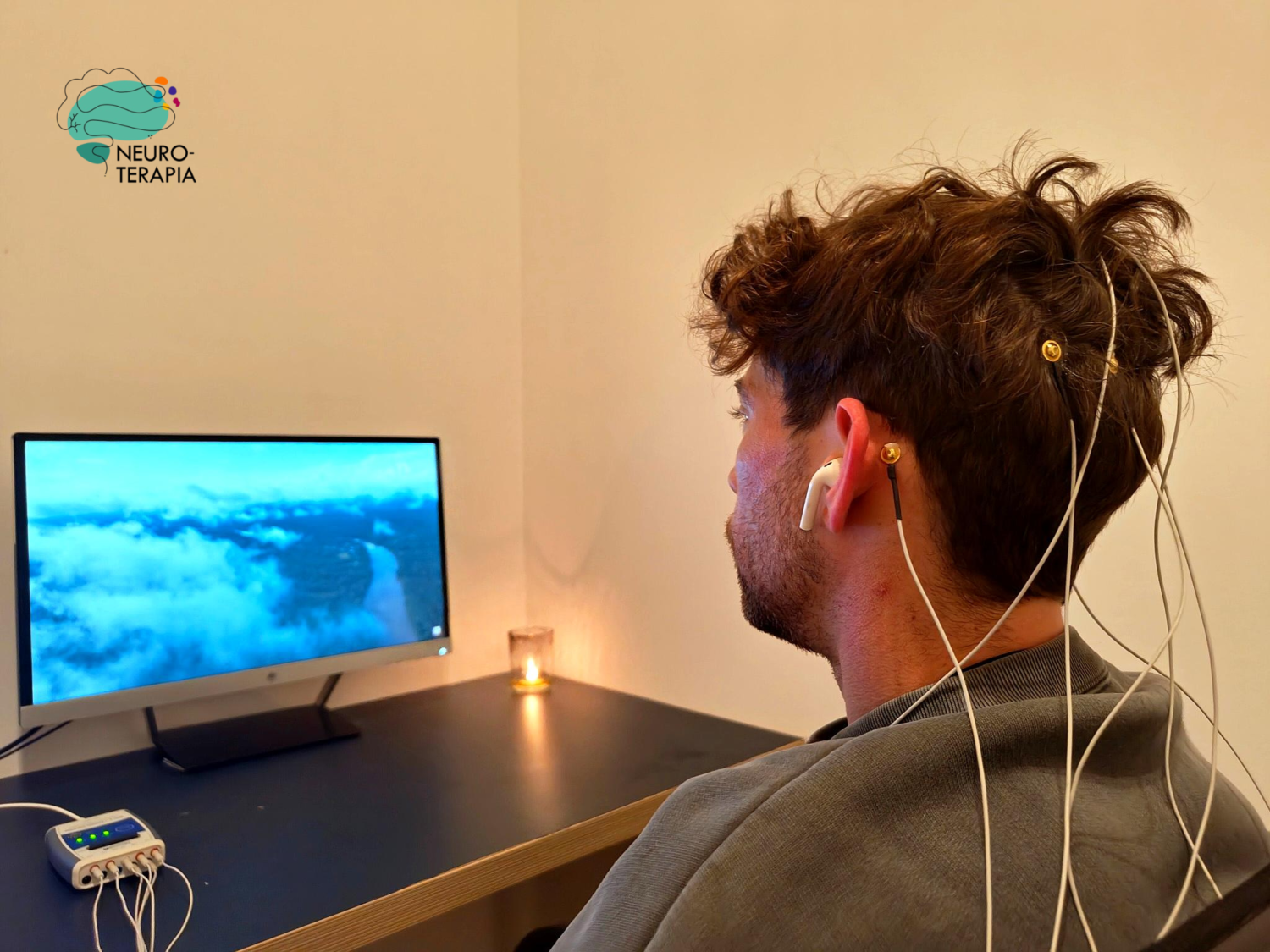
Sensors are placed on the head to measure brain activity in real time.
The patient sits comfortably in front of a screen displaying images or videos.
When the brain produces appropriate patterns, the system reinforces these changes with positive stimuli (such as improving image or sound quality).
If the brain shows signs of dysregulation, the stimuli are reduced, which encourages it to correct itself naturally. This process reinforces healthy patterns and helps reduce emotional or cognitive symptoms without the need for medication.
The training program is flexible: it can be modified based on our assessment of the patient and their progress, adjusting the parameters to ensure optimal progress.
- Frequency of Sessions: The Key to Success
To see significant changes, we recommend 2 to 3 sessions per week, each lasting between 40 minutes and 1 hour. Generally, a package of 20 sessions is suggested as a starting point to evaluate progress and make any necessary adjustments to the treatment.
Important: Every brain is unique, so the duration of treatment varies depending on the individual and their specific needs.
Conclusion
Neurofeedback is an effective tool for improving mental health and brain performance. Through brain mapping, an initial interview, and regular training sessions, it is possible to achieve lasting changes in emotional regulation, concentration, and overall well-being.
If you’re interested in experiencing the benefits of neurofeedback, contact us and schedule your initial evaluation!