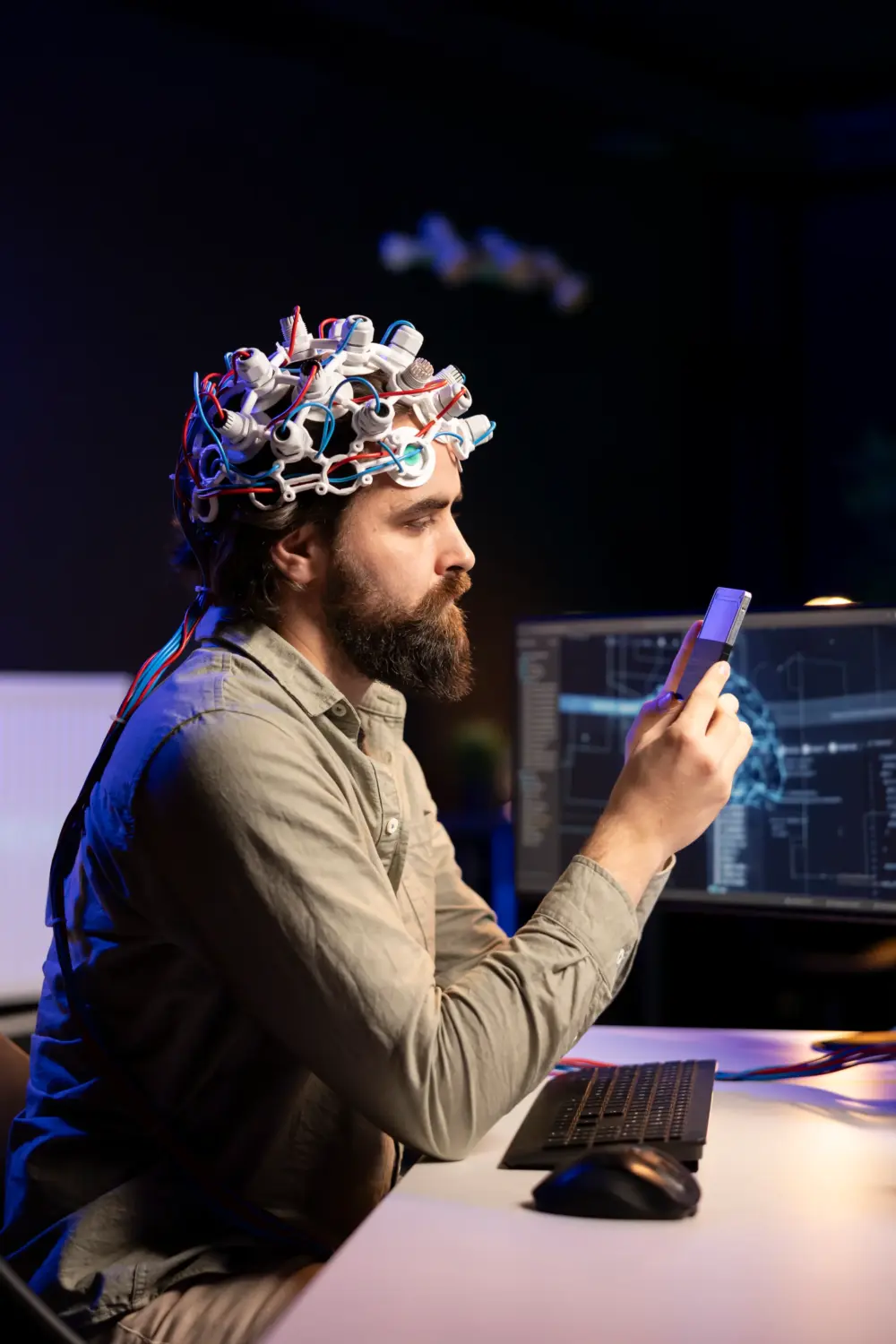
Neurofeedback in Barcelona, also known as neurotherapy or EEG biofeedback, is a therapy that uses technology to identify patterns and irregularities in the brain in a non-invasive way. It involves a machine equipped with electrodes that measure brain activity to assess how the brain is functioning. Once a map of the brain has been created (or “brain mapping”—explained later), a series of visual and/or auditory exercises is designed to help balance the altered patterns.
Is this a new method?
No, not at all. Medical studies have been conducted for more than 60 years, and neurofeedback has been in use since the 1980s. However, it was only recently that the mechanism by which it produces changes in the brain was explained through the discovery of neuroplasticity (the brain’s ability to change). After this fundamental and very important principle was confirmed, the technologies based on it were explained and recognized as scientifically grounded.
Who is neurofeedback for?
You don’t need to have any psychopathology or behavioral problems to use this therapy. Neurofeedback in Barcelona can be a tool to improve everyday aspects of life, such as improving your memory or feeling more relaxed, etc.
In addition, it offers various types of apps that help us treat ADHD and autism, among other conditions: Addictions (tobacco, alcohol, drugs, food), Anxiety, Depression, Eating Disorders, Post-Traumatic Stress Disorder, Insomnia, Stroke, Phobias, Headaches.
“The brain has the extraordinary ability to give you more the more you ask of it.”
— Deepak Chopra
The Effectiveness of Neurofeedback
However, an increasing number of studies have recently emerged demonstrating the effectiveness of neurofeedback for children with ADHD (in 2012, the American Academy of Pediatrics approved neurofeedback therapy as a Level 1 treatment—the highest level of clinical evidence regarding the effectiveness of ADHD treatment). The most important advantage is the absence of side effects—of any kind, but especially those associated with medications.
Furthermore, even more recent studies show that neurofeedback helps enhance the effects of ABA therapy for autism and significantly reduce chronic pain in paraplegia starting from the very first session, along with many other studies that clearly demonstrate the effectiveness of this method.
Because the brain is such a complex organ, its study is a constant focus of the scientific community worldwide. And neurofeedback is part of this focus, precisely because of the positive effects achieved through the use of this revolutionary technology.
+0%
Improvement in Chronic Pain
+0
Clinics Are Already Implementing Neurofeedback in Spain
+0%
Studies support its effectiveness in treating ADHD