

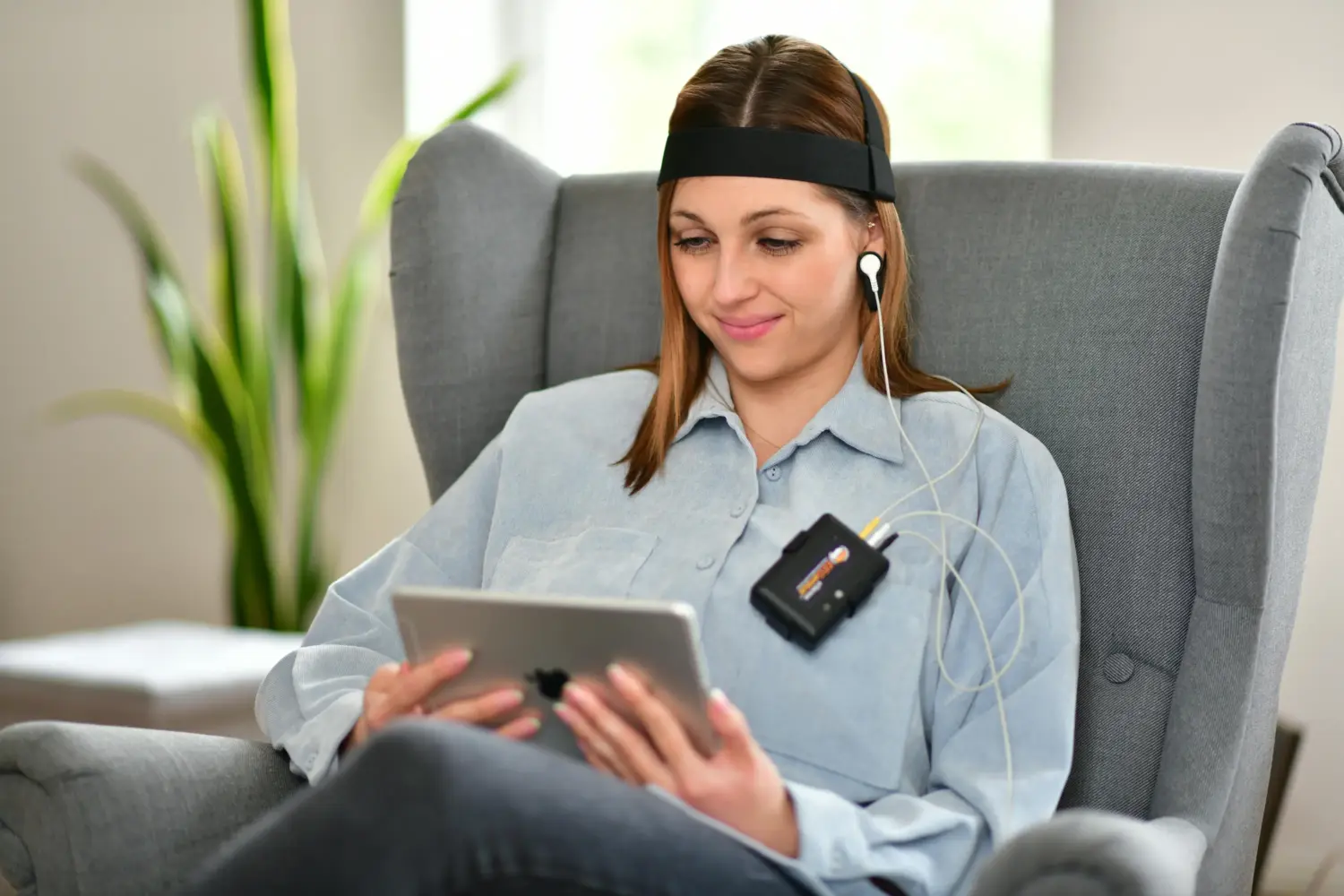
Neurofeedback has emerged as a promising therapeutic alternative for the treatment of migraines and chronic pain. This technique allows patients to modify their brain activity and reduce their perception of pain. Recent studies have examined its effectiveness and reported positive results in alleviating symptoms.
Study on the Use of Neurofeedback for Migraines
A clinical study titled “Neurofeedback and Biofeedback with 37 Migraine Sufferers: A Clinical Outcome Study” evaluated the effectiveness of combined neurofeedback and biofeedback interventions in 37 patients with migraines. The participants underwent training sessions in which they learned to control their brain activity through visual and auditory feedback provided by the EEG.
Key Findings of the Study:
- A significant reduction in the frequency and severity of migraines was observed.
- Patients reported an improvement in their quality of life and a reduction in their need for medication.
- The treatment combined neurofeedback with relaxation techniques to enhance its effects.
The findings suggest that neurofeedback, along with biofeedback, may be an effective strategy for managing migraines, providing patients with a non-pharmacological tool for controlling their symptoms.
A Review of the Impact of Neurofeedback on Chronic Pain
Another study, “A Scoping Review of the Effect of EEG Neurofeedback on Pain Perception and Central Pain Processing in Chronic Pain,” analyzed the impact of EEG-based neurofeedback on the perception and central processing of chronic pain. This review examined various studies on the relationship between brain self-regulation and pain reduction.
Key Findings:
- A significant reduction in pain was observed in patients with chronic headaches and other conditions involving persistent pain.
- Neurofeedback can modulate brain activity in regions associated with pain perception, promoting better emotional and physiological regulation.
- The studies reviewed indicated that the effects of neurofeedback may be comparable to those of some drug therapies, with the advantage of avoiding adverse side effects.
These findings reinforce the idea that neurofeedback may be a viable and safe alternative for the treatment of chronic pain, although further controlled studies are needed to optimize intervention protocols.
Final Thoughts
Neurofeedback is emerging as an innovative tool for managing migraines and chronic pain for patients seeking noninvasive alternatives with no side effects. However, it is recommended that its use be supervised by a multidisciplinary team of professionals to maximize its therapeutic benefits.
Bibliography
- Walker, J. E. (2011). “Neurofeedback Treatment of Chronic Pain.” Clinical EEG and Neuroscience, 42(3), 193–197. https://doi.org/10.1177/155005941104200310
- Stokes, D. A., & Lappin, M. S. (2010). “Neurofeedback and Biofeedback in 37 Migraine Patients: A Clinical Outcome Study.” Behavioral and Brain Functions, 6(1), 9. https://doi.org/10.1186/1744-9081-6-9
- Kayiran, S., Dursun, E., Dursun, N., Ermutlu, N., & Karamursel, S. (2010). “Neurofeedback Intervention in Fibromyalgia Syndrome: A Randomized, Controlled, Rater-Blind Clinical Trial.” Applied Psychophysiology and Biofeedback, 35(4), 293-302. https://doi.org/10.1007/s10484-010-9135-9
- Jensen, M. P., Grierson, C., Tracy-Smith, V., Bacchus, D. M., & Othmer, S. (2007). “Neurofeedback Treatment for Pain Associated with Complex Regional Pain Syndrome Type I.” Journal of Neurotherapy, 11(1), 45–53. https://doi.org/10.1300/J184v11n01_04